UPS Price in Bangladesh — Enjoy Genuine Power Backup at CSI
A UPS (Uninterruptible Power Supply) protects your PC, POS terminal, network gear, or office equipment from sudden power cuts and voltage fluctuations by switching to battery backup within milliseconds — or instantly, in the case of online models. CSI, one of Bangladesh's leading IT product distributors, stocks 100% genuine Mini UPS, Offline UPS, and Online UPS units from trusted brands, all backed by official warranty, verified stock, and nationwide delivery.
Load-shedding, transformer trips, and unstable grid voltage are still part of daily life across Bangladesh — from home offices and freelancer desks in Dhaka to retail counters, ISP nodes, and small server rooms in district towns. A single unprotected outage can corrupt an unsaved file, reset a router mid-download, or knock a billing system offline during peak hours. A UPS is the cheapest insurance policy against all three.
As an authorized IT distributor, CSI sources every UPS unit directly through official brand channels — which means what's listed in this category is exactly what ships to your address, not a repackaged or grey-market clone sold under a different label. This page exists to help you understand which type and capacity of UPS actually fits your situation, before you look at any specific model.
Why Power Backup Matters in the Bangladesh Context
Grid power in Bangladesh fluctuates more than most imported electronics are designed to tolerate — voltage sags, brief drop-outs, and full load-shedding windows are common even in urban areas. This affects three groups differently:
- Home & freelance users: unsaved documents, corrupted downloads, and abrupt shutdowns that shorten a PC's hardware lifespan over time.
- Small businesses & retail shops: POS and billing software that loses an in-progress transaction the moment the lights go out.
- ISPs, offices & server rooms: routers, ONUs, NVRs, and switches that reboot mid-session, breaking connectivity and dropping CCTV recording exactly when it's needed most.
This is also why DC-output mini UPS units — designed specifically to keep a router, ONU, or CCTV camera alive on 5V/9V/12V — have become common in Bangladeshi households and small offices, alongside traditional AC-output offline and online UPS systems for full desktop and server protection.
Types of UPS Available at CSI
Choose a Mini UPS to keep low-power DC devices like routers and cameras alive, an Offline/Line-Interactive UPS for home and small-office AC equipment, and an Online UPS for servers or hardware that cannot tolerate any switchover delay.
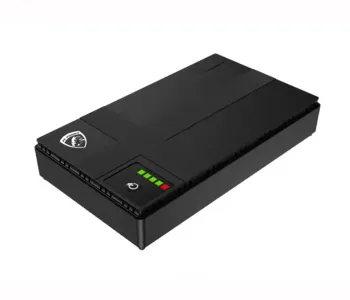
- Mini UPS — a compact, low-capacity DC backup unit, typically running on internal 18650 or lithium cells, delivering 5V/9V/12V or PoE output. Built specifically to keep a home router, ONU, WiFi access point, or single CCTV camera running through short outages, rather than powering a full AC appliance. Popular picks include the WGP Mini UPS range, widely used across Bangladesh specifically for router and ONU backup during load-shedding.
- Offline / Line-Interactive UPS — the most common choice for homes, small businesses, and retail counters. It runs equipment directly off mains power and switches to battery within roughly 2–10 milliseconds when the grid drops — a gap short enough to be harmless for PCs, monitors, and routers, but not suitable for equipment requiring zero interruption.
- Online (Double-Conversion) UPS — continuously converts and regenerates clean AC output, so connected equipment never actually senses a power event. This is the standard for servers, network racks, medical devices, and industrial control systems where even a brief power gap risks data loss or equipment damage.
How to Choose the Right UPS
Match the UPS's VA/Watt rating to your total connected load with 20–30% headroom, then pick topology (mini, offline, or online) based on how power-sensitive your equipment is and how long you need backup to last.
- Load capacity (VA/Watt): Add up the rated wattage of everything you'll plug in — PC, monitor, router, modem. Undersizing is the single most common reason a UPS shuts down under load or fails within months. As a rule of thumb, size the UPS 20–30% above your calculated total load.
- Backup runtime: A few minutes is enough to save open files and shut down a PC safely; a router or ONU backup often needs several hours, which is exactly why DC mini UPS units with larger mAh batteries exist as a separate category from AC UPS units.
- Topology: Offline/line-interactive suits general PC and home appliance use; online suits servers, POS terminals processing live transactions, and any electronics that can't tolerate a switching gap.
- Battery type & replaceability: Sealed lead-acid (SLA) batteries are standard in AC UPS units and are user-replaceable after 2–3 years — check that a compatible replacement battery is locally stocked before buying. Mini UPS units typically use rechargeable 18650 cells rated by mAh capacity instead.
- Output waveform: Pure sine wave output is safer for sensitive electronics, inverter-based devices, and some laptop chargers than a stepped/simulated sine wave, which can cause humming or reduced efficiency in certain equipment.
- Number & type of outlets/ports: Confirm the UPS has enough universal sockets (for AC units) or the correct DC voltage ports — 5V, 9V, 12V — for the specific devices you're protecting (for mini UPS units).
- Brand support & warranty: A UPS is only as reliable as the after-sales service behind it. Confirm official warranty coverage and whether replacement batteries or units are actually available in Bangladesh before committing.
Which UPS Fits Your Use Case?
| Use Case | Recommended UPS Type | Why |
|---|---|---|
| Home PC / student desktop | Mini UPS or entry Offline UPS | Enough runtime to save work and shut down safely |
| Router, ONU & WiFi access point | DC Mini UPS (5V/9V/12V) | Keeps internet connectivity alive for hours during load-shedding, without powering a full AC UPS unnecessarily |
| Home office / small shop counter | Offline / Line-Interactive UPS | Balanced backup time and protection for everyday appliances |
| Retail POS & billing systems | Offline or Online UPS | Prevents in-progress transaction loss during frequent short outages |
| Server room / network rack | Online (Double-Conversion) UPS | Zero switchover time protects always-on infrastructure |
| CCTV/NVR & security systems | Mini UPS (single camera) or Offline UPS (full NVR setup) | Keeps recording and live monitoring active exactly when outages create security risk |
| Freelancer / remote work setup | Offline UPS with pure sine wave output | Protects billable work sessions and sensitive equipment like external monitors |
Common UPS Buying Mistakes to Avoid
The most frequent UPS buying mistakes are undersizing capacity, ignoring waveform type, and buying an uncertified unit with no local warranty support.
- Buying by price alone: the cheapest unit at a given VA rating often cuts corners on battery quality or surge protection — leading to early failure exactly when it's needed most.
- Ignoring actual load: a 600VA UPS rated for a PC and monitor will shut down instantly if you also plug in a printer or router into the same unit.
- Choosing offline UPS for critical equipment: a few milliseconds of switchover is invisible to a PC but can crash a server or reboot networking gear.
- Overlooking battery replacement availability: an AC UPS with a dead, unreplaceable battery is effectively e-waste — check local stock before buying.
- Assuming all mini UPS units are interchangeable: voltage output (5V/9V/12V) and port type must match your router or camera's power adapter exactly.
Why Buy Your UPS from CSI
CSI is a nationally recognized IT products distributor in Bangladesh — every UPS sold is genuine, warrantied, and backed by real after-sales support, not just a marketplace listing with no accountability.
- Authorized distribution: CSI sources UPS units directly through official brand channels across Mini, Offline, and Online categories — no counterfeit, relabeled, or refurbished units.
- Official warranty & service: Every unit ships with manufacturer-backed warranty and access to CSI's own after-sales support desk for troubleshooting and replacement claims.
- Nationwide secure delivery: Orders are packaged for safe transit and delivered to any district in Bangladesh, not just Dhaka.
- Real technical guidance: CSI's support team helps you size the right VA/Watt capacity and topology before you buy — not after a unit fails under load.
- Consistent stock across categories: as a distributor rather than a single-brand reseller, CSI carries Mini, Offline, and Online UPS side by side, so you can compare topology rather than being locked into one brand's lineup.
- Wider power ecosystem: Beyond UPS, CSI stocks batteries and full office equipment — so your backup power setup is never a one-off purchase you have to re-source elsewhere later.
Frequently Asked Questions
What determines UPS price in Bangladesh?
UPS pricing depends mainly on VA/Watt capacity, battery backup time, topology (mini, offline, or online), output waveform, and brand warranty coverage — higher capacity and online double-conversion units cost more than basic mini or offline UPS models.
Which UPS is best for a home PC?
An entry-level offline UPS is usually the best fit for a home PC — it provides enough runtime to save your work and shut down safely during a power cut, at a lower cost than an online unit.
Can a mini UPS power a router during load-shedding?
Yes. DC mini UPS units are specifically designed to keep a router, ONU, or WiFi access point running on 5V, 9V, or 12V output, often providing several hours of backup on a full charge — making them a popular, low-cost alternative to a full AC UPS for internet continuity.
What's the difference between offline and online UPS?
An offline UPS switches to battery within a few milliseconds after detecting a power failure, which is safe for PCs and routers. An online UPS continuously runs equipment off a regenerated power signal with zero switchover gap, making it the standard for servers and critical systems.
How do I calculate what UPS capacity I need?
Add up the rated wattage of all devices you plan to connect, then choose a UPS rated at least 20–30% above that total to allow safe headroom and avoid overload shutdowns.
How long do UPS batteries usually last?
Sealed lead-acid batteries used in most AC UPS units typically need replacement every 2–3 years depending on usage frequency and outage duration, while mini UPS units with 18650 lithium cells are commonly rated for hundreds of charge cycles.